

Running injuries
Explore the 43 most common running injuries, sorted by body area. Each guide details the causes, symptoms and appropriate treatments.
The vast majority of running injuries are mechanical overload conditions: the stresses applied to tissues exceed their capacity to adapt. Managing this mechanical stress is therefore essential for both prevention and treatment.
Biomechanical factors
Body shape, running technique, muscle deficits, stiffness.
Training factors
Volume, intensity, progression, recovery.
Personal & equipment factors
Age, history, sleep, shoes, running surface.
A comprehensive approach
Not just the pain: lasting recovery depends on identifying the contributing factors.
7 injuries found
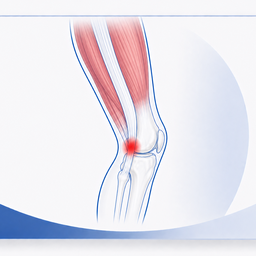
Iliotibial band syndrome
Irritation of the iliotibial band on the outer side of the knee, very common in runners.
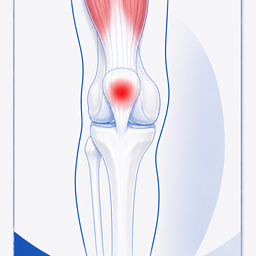
Patellofemoral pain syndrome
Anterior knee pain caused by poor patellar tracking, accounting for 25 to 40% of knee injuries in runners.
Knee osteoarthritis
Osteoarthritis of the knee characterised by progressive wear of the cartilage.
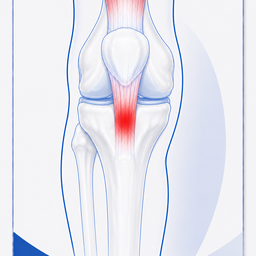
Patellar tendinopathy
Overuse tendinopathy of the patellar tendon causing pain below the kneecap, common in runners and jumping athletes.
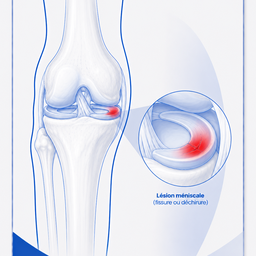
Meniscal injury in runners
Damage to the knee meniscus through a tear or progressive degeneration, common in runners over 35.
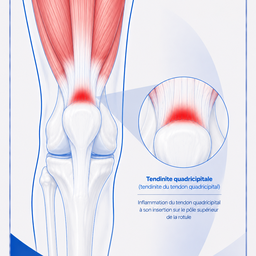
Quadriceps tendinopathy
Inflammation of the quadriceps tendon above the kneecap, a common overuse injury when training is increased too quickly.
Pes anserinus tendinopathy
Inflammation of the tendons that insert on the inner side of the tibia (sartorius, gracilis, semitendinosus), causing pain on the inner side of the knee.