
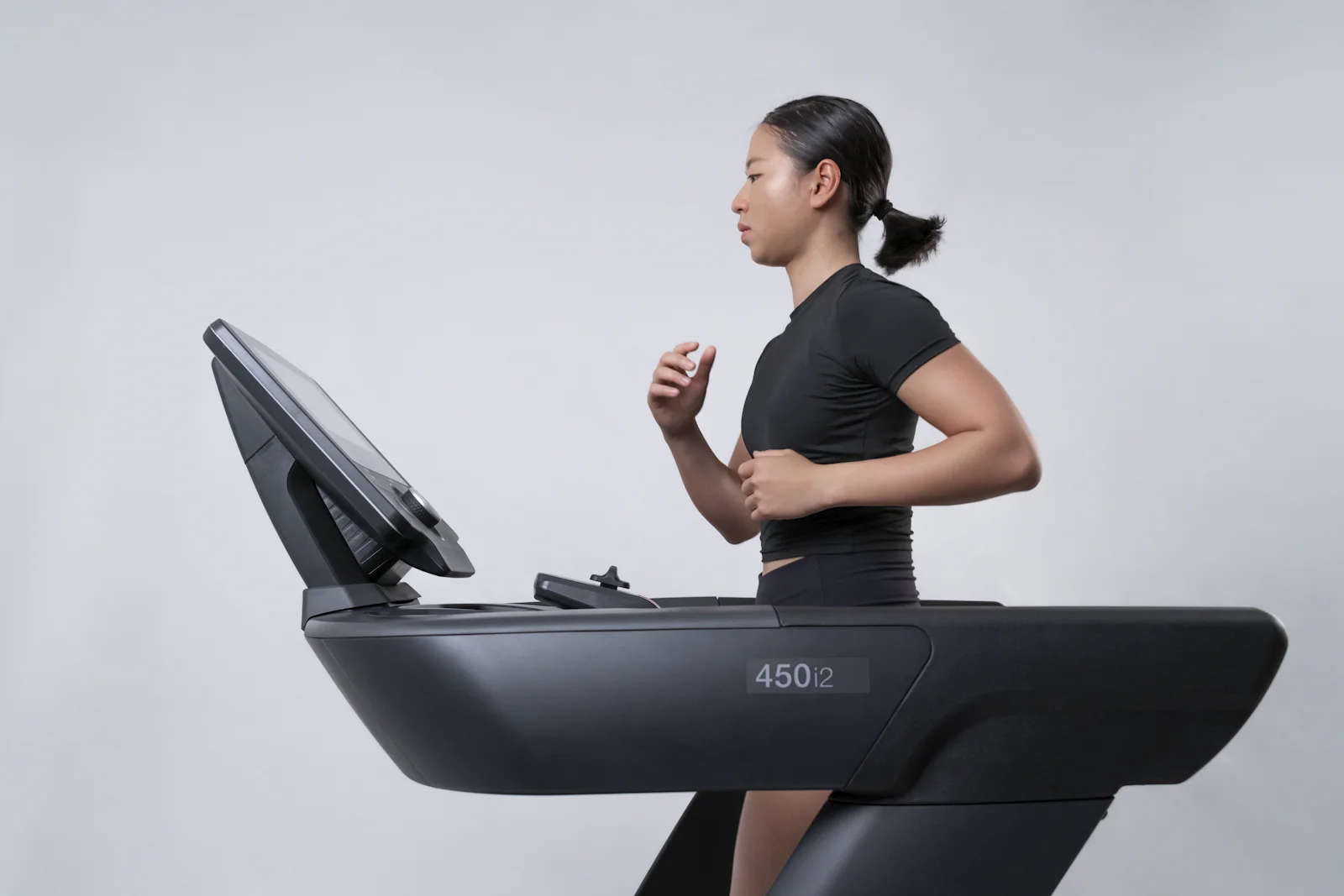
The exercise stress test is a physiological assessment tool that helps runners get to know themselves better and optimise their training. It measures the body’s responses to progressively increasing effort up to maximal intensity.
Carried out with a sports physician or a physiologist, it provides objective data on heart rate, oxygen consumption and intensity thresholds — information impossible to obtain otherwise.
Key message: The exercise stress test makes it possible to define training zones precisely, assess your real physiological level and detect any contraindications to intense exercise.
🏃 Why have an exercise stress test?
Precisely defines training zones: recovery, easy endurance, lactate threshold, VO₂max — based on your real physiology.
Measures VO₂max, running economy and lactate threshold for a precise picture of your potential and progress.
Helps build appropriate sessions — intervals, long runs, threshold work — and avoid overtraining.
Identifies any cardiac or respiratory abnormalities before pushing the body to maximal intensity.
⚙️ How does the test work?
Check of general health and resting ECG if necessary. The physician explains the goals and how the protocol will run.
The runner is set up on a treadmill or a stationary bike. Sensors measure heart rate, oxygen saturation, blood pressure and VO₂.
Intensity increases gradually every 1 to 3 minutes (speed or incline). The aim is to reach maximal fatigue while collecting precise data.
Collection of ventilatory thresholds, VO₂max and heart rates for each zone. Optionally: blood lactate measurement to refine the anaerobic threshold.
The physician or physiologist interprets the results. Each training zone is defined and a personalised plan is drawn up based on the runner’s real physiology.
🔬 The indicators measured
During the test, the runner wears a gas-analysis mask connected to a metabolic analyser that continuously measures the volume of air ventilated and the concentrations of inspired and expired O₂ and CO₂. These data are used to calculate four key indicators.
Detected from changes in the ventilatory equivalents measured by the gas analyser.
- VT1: VE/VO₂ rises without any rise in VE/VCO₂ → aerobic threshold
- VT2: VE/VO₂ and VE/VCO₂ rise simultaneously → anaerobic threshold (hyperventilation linked to acidosis)
- These two points define personalised training zones
Calculated continuously by the analyser using the formula:
- VO₂ = ventilated volume × (inspired O₂ fraction − expired O₂ fraction)
- VO₂max is reached when this value plateaus despite increasing intensity
- Expressed in mL/min/kg — the main marker of maximal aerobic capacity
Measured in parallel via ECG or a chest strap, then synchronised with the respiratory data.
- Each ventilatory threshold (VT1, VT2) is associated with a precise HR
- Allows training zones to be calibrated from the real HR
- Replaces generic estimates (220 – age), which are inadequate for sporting use
Blood samples (fingertip) at each stage to measure blood lactate levels.
- Refines the determination of the anaerobic threshold (LT2)
- Complements the ventilatory analysis with a direct metabolic measure
- Not systematic — available in some specialised protocols
✅ Key takeaways
Unlike generic estimates, zones derived from an exercise stress test are based on your real physiology. They make every session more effective and better targeted.
Repeating the test every 12 to 18 months gives an objective measure of progress and allows the training plan to be adjusted as capacities change.
The exercise stress test also screens for silent cardiac or respiratory abnormalities. It is recommended before resuming intensive training after the age of 40 or after a long break.
The raw test data are not enough. Support from a strength and conditioning coach specialising in running helps you make the most of them in everyday practice.
The exercise stress test is an investment in self-knowledge. It turns subjective sensations into objective data: precise heart rate zones, real thresholds, measured aerobic potential. This information allows you to plan truly tailored training, avoid overtraining and progress sustainably. It is also a useful medical check-up to make sure your body can handle the planned training loads.