

When running, the body uses several energy systems to produce ATP, the energy directly usable by the muscles. [1,2]
These pathways do not compete: each has its own characteristics and they work in a complementary and simultaneous way.
Key metaphor: Energy metabolism works like a hybrid engine. A main combustion engine (aerobic pathway) using oxygen, supplemented by two small electric motors (anaerobic alactic and anaerobic lactic), less enduring but very responsive.
⚡ The three metabolic pathways
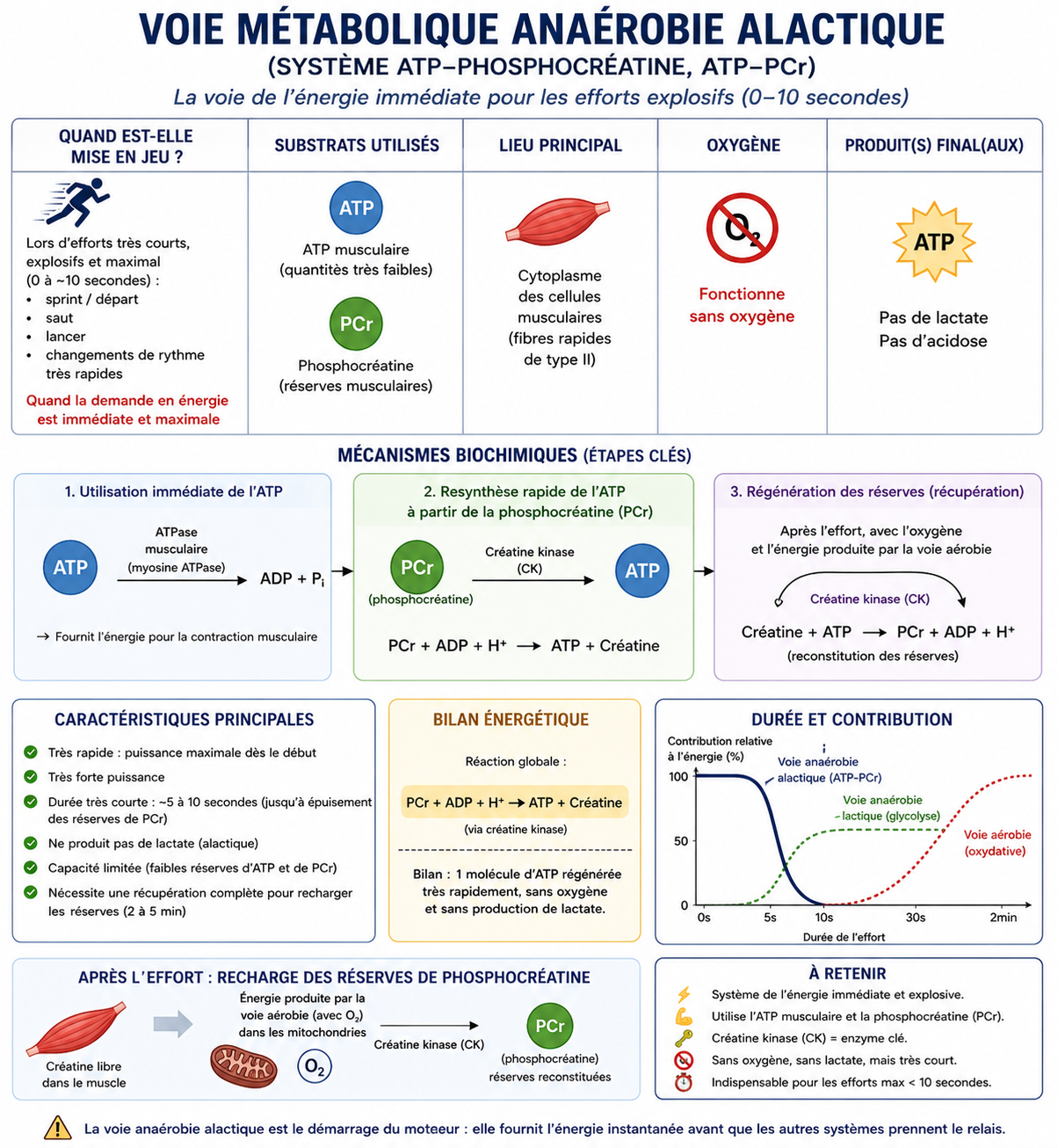
Maximal effort < 10 seconds. Relies on the immediate hydrolysis of ATP and resynthesis via phosphocreatine (PCr). No oxygen, no lactate.
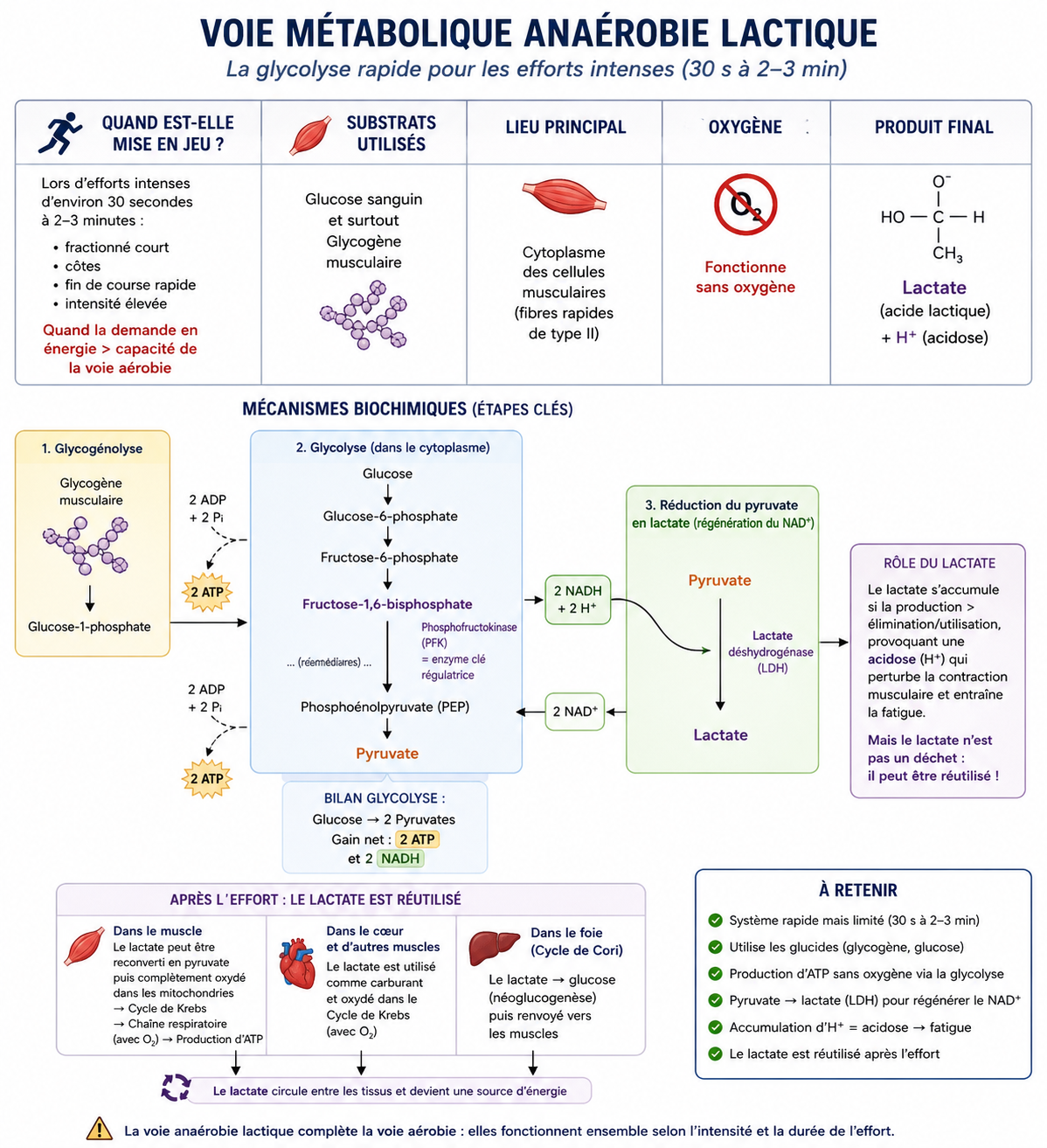
[1]Intense effort from 30 s to 3 min. Rapid glycolysis of glucose into pyruvate, then into lactate. ATP production without oxygen, limited in time.
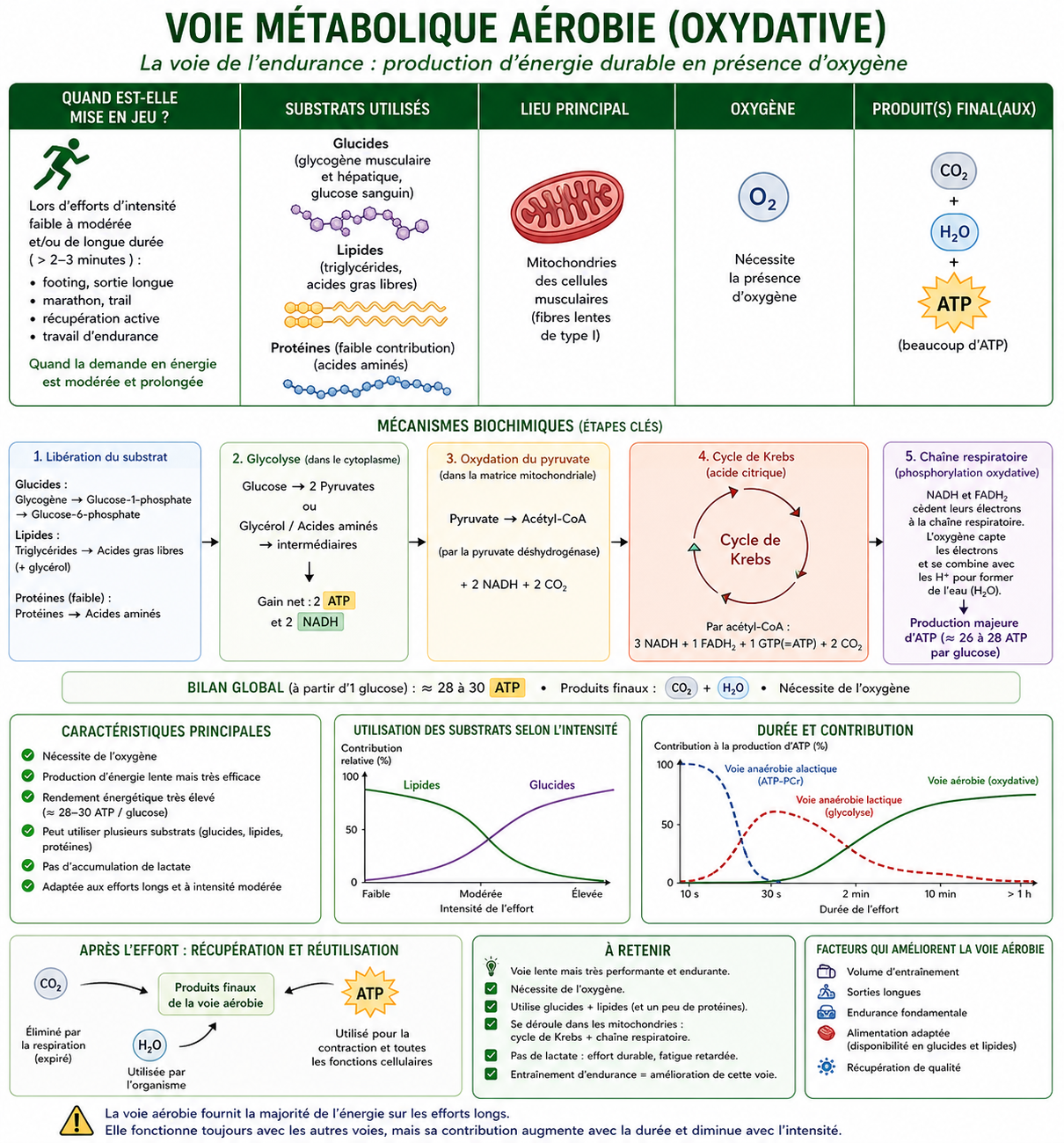
[2,3]Effort > 2–3 min at moderate intensity. Uses carbohydrates and fats (and marginally proteins). Essential for endurance and the marathon.
[1,4]🔬 Detailed mechanisms for each system
🍎 Energy substrates
Stored as muscle and liver glycogen, carbohydrates provide readily available energy. They are essential during high-intensity efforts. [4,5]
- Fast, directly available energy
- Predominant above the aerobic threshold
- Limited stores (~1,500–2,000 kcal)
In the form of triglycerides and fatty acids, fats are a long-lasting source of energy. Used mainly during low-intensity efforts. [4]
- Very large stores (80,000–100,000 kcal)
- Ideal in zones 1–2 (easy endurance)
- Oxidation depends on available carbohydrates
Proteins contribute little to energy production (5 to 10%). They are mainly mobilised during prolonged efforts or when glycogen is depleted. [6]
- Secondary energy role
- Increases during efforts > 3 hours
- To be avoided as the main substrate (catabolism)
🔄 How the pathways interact and contribute
The three systems always work simultaneously, even though their respective contributions vary with the type and intensity of the effort. [1,2]
Easy run / Endurance
Aerobic pathway dominant — heavy use of fats. Ideal for sparing glycogen.
Intervals
Glycolysis predominant — intensive use of carbohydrates, lactate production and H⁺ accumulation.
Sprint
Phosphagen pathway dominant — immediate hydrolysis of ATP and resynthesis via phosphocreatine.
Fat oxidation depends on carbohydrate availability, notably via oxaloacetate, which is essential to the Krebs cycle. [1,4]
Without carbohydrates: reduced fat oxidation and lower ATP production.
🎯 Implications for training
Improves fat utilisation and develops mitochondrial adaptations. The foundation of any endurance programme. [4,7]
Improves lactate tolerance and raises the lactate threshold. Promotes the efficiency of aerobic glycolysis. [3]
Develops anaerobic alactic power and increases phosphocreatine stores. Essential for maximal speed. [1]
Optimises the use of energy substrates according to the effort. Appropriate carbohydrate intake preserves glycogen during long runs. [5]
📈 The crossover concept
📌 Definition
The crossover is the point at which the body switches from mainly using fats to predominantly using carbohydrates. [4,8]
The higher the intensity at which this switch occurs, the faster the runner can run while burning mainly fat — sparing glycogen and delaying fatigue.
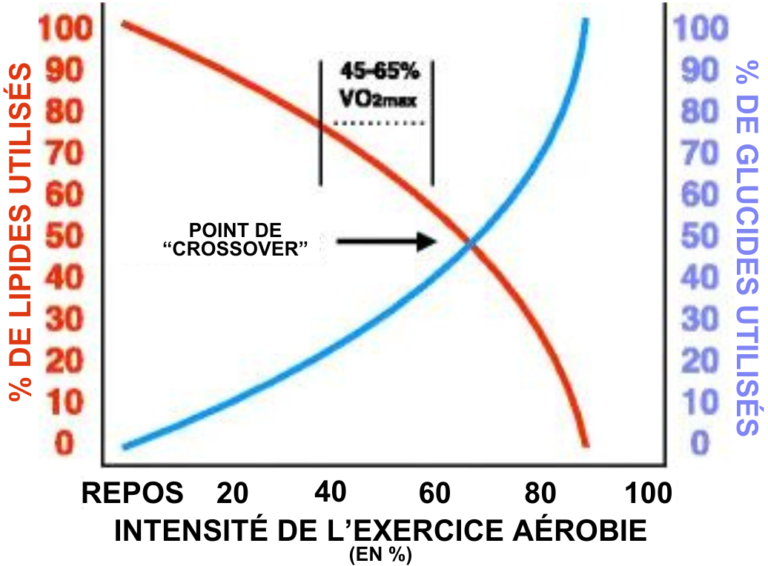
Substrate use according to exercise intensity [4,8]
🔧 Influencing factors
Effort intensity, exercise duration, training level and substrate availability. [4,5,7,8]
🎯 Why it matters for runners
Spares glycogen, delays fatigue, improves overall endurance. Fat stores are far larger than glycogen stores. [4,8]
⚙️ How to improve it
Easy endurance (65–75% HRmax), long runs, fasted sessions (with caution), appropriate nutrition, aerobic threshold work. [4,7]
💡 Practical tip
Running at low intensity, sometimes fasted, can promote fat use and delay carbohydrate use. [7,8]
Key takeaway
3 pathways, 1 hybrid engine
Understanding energy metabolism means learning to dose and train each system intelligently. Well-developed easy endurance, a raised lactate threshold and maintained anaerobic power — these are the three pillars of lasting performance and a resilient body.
- Brooks GA, et al. Exercise physiology: human bioenergetics and its applications. McGraw-Hill. 2005.
- Gastin PB. Energy system interaction and relative contribution during maximal exercise. Sports Med. 2001.
- Gladden LB. Lactate metabolism: a new paradigm for the third millennium. J Physiol. 2004.
- Brooks GA. The crossover concept and the biochemistry of mixed substrates. J Appl Physiol. 1997.
- Jeukendrup AE. Carbohydrate intake during exercise and performance. Nutrition. 2004. Sports Med. 2014.
- Tipton KD. Protein for endurance athletes. J Sports Sci. 2004.
- Holloszy JO. Adaptations of skeletal muscle to endurance exercise and their metabolic consequences. J Biol Chem. 1967.
- Romijn JA, et al. Regulation of endogenous fat and carbohydrate metabolism during exercise. Am J Physiol. 1993.