
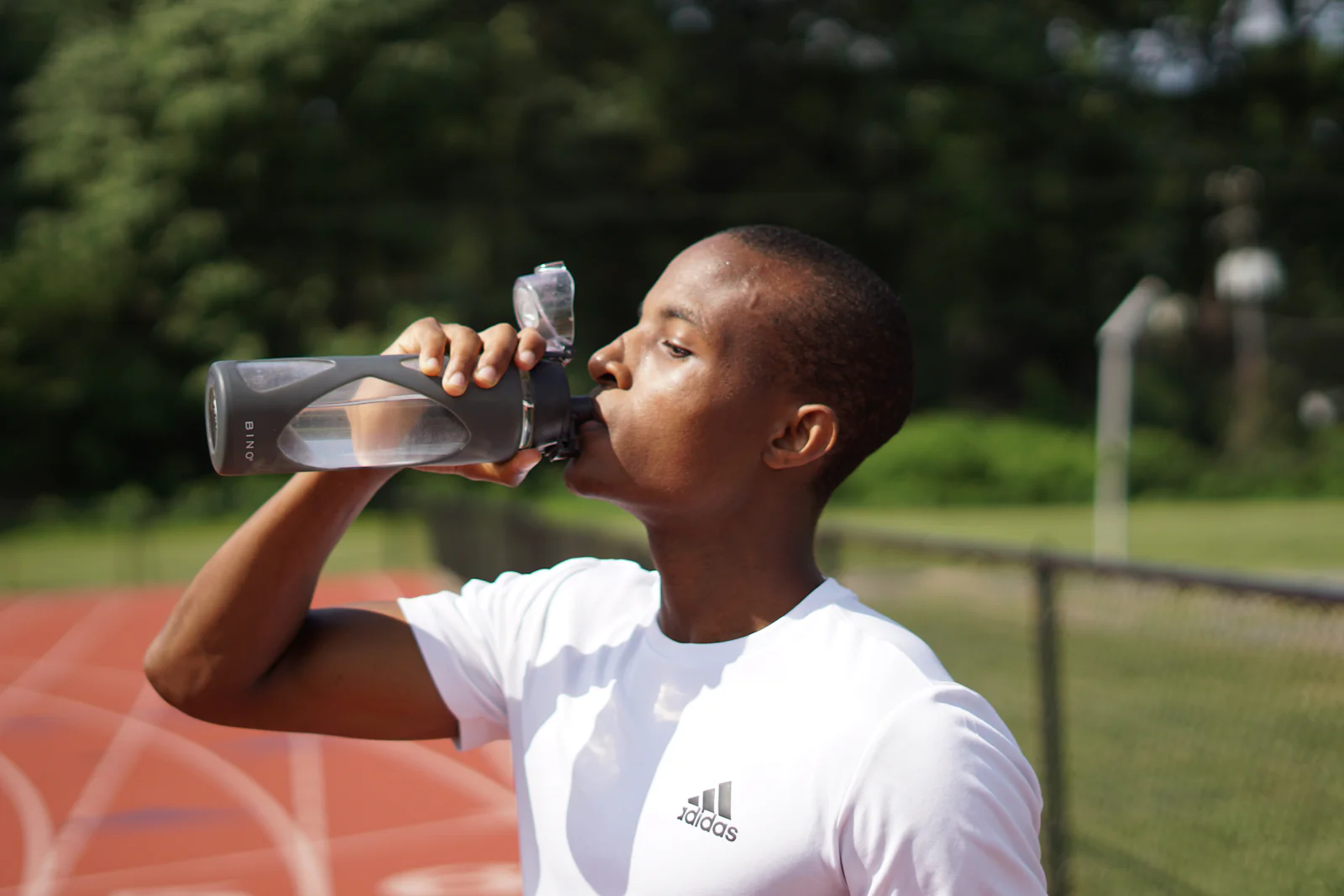
Nutrition plays an essential role in the runner’s performance and recovery. [1,2] An appropriate nutritional strategy optimises energy stores, sustains the effort during the race and promotes rapid recovery. [2,3]
It is organised around three key moments: before, during and after the race.
Key message: Planning your nutrition before, during and after the race helps delay fatigue, avoid “hitting the wall” and speed up muscle recovery. [1,2]
🕐 The 3 key moments of runner nutrition
Top up glycogen stores with complex carbohydrates, optimise hydration and support digestion before the start. [1,4]
Maintain carbohydrate and fluid intake to avoid glycogen depletion and prevent dehydration depending on the duration of the effort. [2,5]
Replenish energy stores, provide protein for muscle repair and rehydrate the body quickly. [3,6]
🍽️ Before the race: building up energy stores
In the days and hours before a race, the main goal is to fill glycogen stores — the main energy source during endurance exercise. [1,4]
Gradually increase the share of complex carbohydrates in your diet. [1,4]
- Pasta, rice, quinoa
- Potatoes
- Wholemeal bread
- Pulses
➡️ Easily digestible, balanced meals, limiting foods that are hard to digest [2]
The last meal is ideally eaten 3 to 4 hours before the start. [2]
- Rich in carbohydrates
- Moderate in protein
- Low in fat and fibre
➡️ Limit digestive problems and optimise available energy [2,5]
Good hydration is essential in the hours before exercise. [3]
- Drink regularly throughout the previous day
- Avoid drinking large amounts just before the start
- Check urine colour (pale yellow = good hydration)
➡️ Start well hydrated to delay dehydration [3]
⚡ During the race: maintaining energy
During exercise, glycogen stores gradually decrease, which can lead to a drop in performance — the dreaded “wall”. [1,4] The nutritional intake to plan depends on the duration of the race.
Hydration alone is generally enough for short efforts. [3]
- Water only
- No carbohydrate intake needed
➡️ Glycogen stores are sufficient for this effort [3]
Carbohydrate intake becomes recommended to maintain performance. [2,5]
- Energy gels
- Energy drinks
- Bars or fruit jellies
➡️ 30 to 60 g of carbohydrates per hour [2]
For prolonged efforts, needs increase and electrolytes become essential. [3,5]
- Regular carbohydrate intake
- Continuous hydration
- Electrolytes (especially sodium)
➡️ 60 to 90 g of carbohydrates per hour [2,5]
Always test nutrition products in training, never on race day. Digestive tolerance varies from one runner to another and must be assessed under real exercise conditions.
🔄 After the race: promoting recovery
After exercise, the body enters a rebuilding phase. Three nutritional priorities stand out to optimise recovery. [1,3]
Eating carbohydrates in the hour after exercise is essential — this is the “metabolic window”. [1,4]
- Fruit, fruit juice
- Bread, rice, pasta
- Sweetened recovery drink
➡️ Take advantage of post-exercise insulin sensitivity to maximise restocking [1]
Proteins enable muscle repair and adaptation to training. [2,6]
- Eggs, poultry, fish
- Greek yoghurt, fromage frais
- Pulses, tofu
➡️ Combine carbohydrates + protein for optimal recovery [2]
Rehydration compensates for fluid and electrolyte losses from sweating. [3]
- Mineral water or tap water
- Recovery drink with electrolytes
- Water-rich foods (fruit, soups)
➡️ Drink 1.5× the volume of sweat lost within 2–4 h after exercise [3]
✅ Key points to remember
Favour complex carbohydrates in the preceding days and a digestible last meal 3 to 4 h before the start to optimise energy stores. [1,4]
Hydrate continuously. Provide 30–60 g of carbohydrates/hour for efforts of 1 to 2 h, 60–90 g/hour beyond that. Always test in training. [2,5]
Within an hour of finishing, combine carbohydrates (glycogen restocking), protein (muscle repair) and rehydration to speed up recovery. [3,6]
Needs vary according to level, duration of effort and individual tolerance. Testing your nutritional choices in training remains essential before applying them in competition.
Runner nutrition is not just about what you eat every day. Planning intake before the start, maintaining energy during the effort and optimising recovery immediately afterwards make up a complete strategy validated by the scientific literature. Well prepared, nutrition around a race becomes a real lever for performance and injury prevention.
- Burke LM, et al. Carbohydrates for training and competition. J Sports Sci. 2011.
- Jeukendrup AE. Nutrition for endurance sports: marathon, triathlon, and road cycling. Sports Med. 2011.
- Sawka MN, et al. American College of Sports Medicine position stand: exercise and fluid replacement. Med Sci Sports Exerc. 2007.
- Coyle EF. Substrate utilization during exercise in active people. J Appl Physiol. 1995.
- Thomas DT, Erdman KA, Burke LM. Position of the Academy of Nutrition and Dietetics, Dietitians of Canada, and the American College of Sports Medicine: Nutrition and Athletic Performance. J Acad Nutr Diet. 2016.
- Tipton KD, Wolfe RR. Protein and amino acids for athletes. J Sports Sci. 2004.